
Just last year, the Ministry of Agriculture, Forestry and Fisheries (MAFF) published a report that indicated a decrease in “core agricultural workers,” falling by over half to a new low of 1.1 million. The Ministry has continuously raised alarms about the worsening shortage of laborers in the agricultural sector—according to the report, their average age is now nearly 70 years. For many farmers, long hours and tough work have been a steady reality. Now, what lies ahead remains uncertain, even with growing help from migrant laborers.
During the winter of 2025, I spent around one month working as a farmhand on Horikawa Dairy Farm in the Tokachi region. I worked not out of research interest but out of necessity—I needed the money and found a farm willing to hire me. Granted, I was interested in finding out more about the status of farms amidst the labor shortages and told the Horikawa family about that interest. The time I spent there gave me a glimpse into the consequences of labor shortages and the frustrations of an aging generation of farmers, along with the challenges that migrant laborers face in agriculture.
The dairy farm itself has spanned generations and the family takes pride in belonging to a working class that grew out of the post-war period. Horikawa’s older sister, his wife explained to me, was born in Manchuria during the days of colonial expansion. After the war, the family made its way back to a mainland where options were few and the future was bleak.
The area where they settled—the Tokachi region—holds many similar stories. Only recently has rice been cultivated in the region, and with it, the land’s value has increased. In the days when Horikawa settled, the soil and climate made rice farming impractical. From there, with just a few cows, the family explained, Tokaichi’s dairy industry took root. Those times were tough. There was not much to eat and every day, even as a child, work came first and last.
Now, seventy years later, there is a stock of just around two hundred cows that are milked twice a day—first at 3 a.m., and then later in the afternoon, before settling in for lights out, at 8 p.m. A hard life, built only for hard people, despite the repeated claim that “anyone can do the work” since “everyone started from nothing.”
Such things, Horikawa balks, are no longer tolerated by a softer generation of working Japanese. Horikawa’s training methods are not for the faint of heart—yelling, scolding, name-calling—most, it is said, quit after a month or two. Taking a step into the milking lines is like taking a step forty years into the past and the inability for many to adjust is a voiced frustration for the Horikawa family. “Teaching someone how to do a job is harassment these days,” he lamented while answering a question about labor shortages that the agricultural sector faces. Even now, Horikawa’s wife works every day in spite of her cancer treatment. Horikawa’s rumblings echo a generation that is eager to pass on the lifestyle it pioneered, while also equally fearful of letting it go.
Horikawa’s frustrations regarding a softening workforce extend to incoming migrant workers. The family’s memories of struggling to provide food linger and cause judgment to pass on those who don’t share the same values. A Vietnamese coworker, Minh, is often scrutinized for picky eating habits. Noodles, he explained, are rarely eaten in Vietnam outside of soup, so it is strange and a food he wishes to avoid. Come dinner time, he always passes over his spaghetti, udon or yakisoba. When there are no takers, the food sneakily ends up in the garbage. The family took note of the waste, no doubt one of the causes of friction between the two.
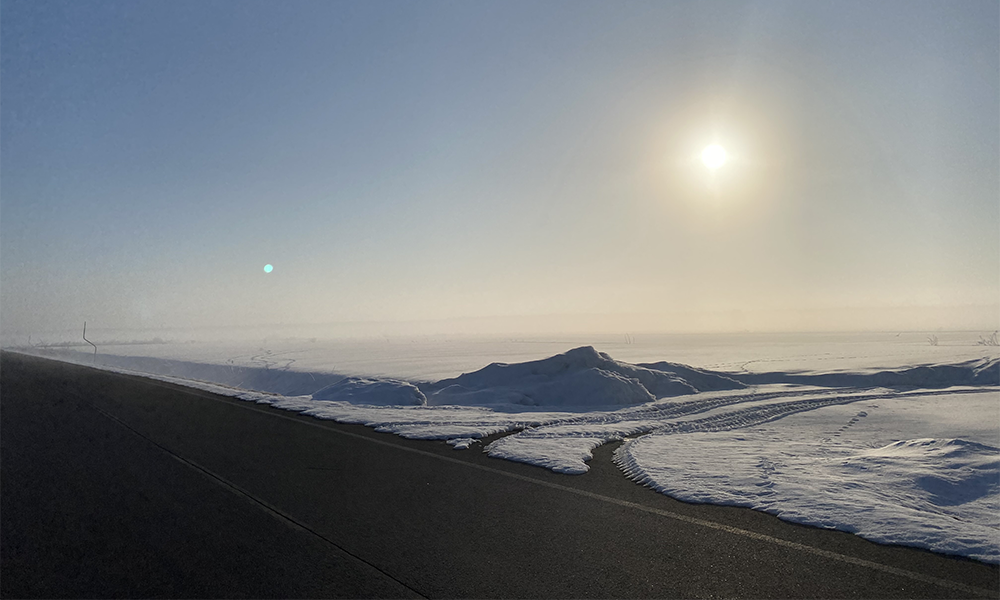
Still, these frictions can be complicated, and desperation can overtake the desire to avoid conflict. Horikawa often spoke of the uncertainty of what will become. Driving through the snow past open fields he points to old farms and mentions they used to milk cows too but they’ve folded up.
This environment of uncertainty plays out amidst a continuous push by the ministry to pivot towards migrant labor to help alleviate the strain of a shrinking workforce. Since the introduction of the Special Skilled Worker class of visa in 2019 which allows for eligible applicants to enter the workforce, the number of migrants working in the agriculture sector has nearly doubled according to the recent MAFF report. This has worked in tandem with the recently revised Technical Intern Training Program, which originally trained workers for key industries, but which will now be reformed to train and encourage migrants to transition towards a long-term stay post-training, and even bring family members. Though what shape these policies will take is unclear, these statuses allow pathways for workers like Minh to stay in Japan and work for a period of time.
Horikawa himself isn’t sure when it’ll be time to pack up. Ultimately, he doesn’t feel confident in his son, he confided, accenting a tension between the two. Even the son of such a hard worker like Horikawa doesn’t know sacrifice, at least not in his father’s eyes. This personal tension reflects a wider issue in the diminishing agricultural sector—the struggle to find suitable successors.
There is one candidate that Horikawa looked to, Rizal, a young man from Indonesia. During my first few days, Horikawa introduced us, entrusting Rizal with the task of training me. A memorable scene remains of Rizal tugging and coaxing a cow into its new living space, a ritual for newly matured cows. Of all the workers, Rizal is a natural. Horikawa implied a few times when we are together that Rizal could be someone he trusts to ensure things go well.
Horikawa’s rumblings echo a generation that is equally eager to pass on the lifestyle it pioneered while also fearful of letting it go.
Despite the praise for the young man, one morning during breakfast, when Rizal abstains while fasting for Ramadan, Horikawa thinks aloud about what fasting is, and about religion. What is happening in the Middle East, in reference to the conflict between Israel and Palestine, he conjectures, is about religion. “I wonder what will happen in Japan when more people with religion come,” he trailed off thinking as I sat and listened. Yet, through this uncertainty it is clear that he thinks highly of the young man and was troubled by Rizal’s plans to leave Japan to marry his longtime partner in Indonesia.
For Rizal the choice to leave is a practical one: his bride-to-be is a school teacher in Indonesia who has no intention of giving up her work. He enjoys living in Japan, however, he explained one afternoon, there is not much that he can offer a family. He also fears that, even with language ability and a university education, his partner won’t find similar work. In the end, the issue of succession remains open.
Minh, on the other hand, hopes to continue working in Japan and often asked about other job opportunities. He made it clear that his visa status pigeonholed him into only being able to work jobs that dealt with livestock—prior to cows, he was tending to chickens, he explained—a result of a new Special Skilled Worker class of visa. Other farms were nicer, allowing freedom to cook for oneself, but with limited language ability, he felt stressed and remained working in Hokkaido, though with little vision of the future.
On a small farm in Hokkaido an impending labor crisis plays out each night. It happens as we all sit together and break bread after a day’s work. Though in silence, we all make the same wish together: that we never have to do this again. Even Horikawa, proud of what he has built, looks to the end by worrying about what will come next and who will carry it on. The rest of us are weighing our options and looking for a sense of security. The same one Horikawa sought for years, and is still searching for. Meanwhile, politics push and pull. The recent Ishiba administration moved to rework guidelines for migrants to potentially allow for greater training and more flexibility in work. Now, policy under the Takaichi administration has begun to take shape. Just as it seemed a hand might be extended through the recent push for reforms of the technical training program and other low-skill work statuses, a hand may be taken away with increases in prices for visa renewals and changes in access to scholarships. All the while, the future for workers like Minh and Rizal, as well as farmers like the Horikawa family, remains just as unclear.

Matthew Myles is a recent graduate from Waseda University’s Graduate School of Social Sciences. His research spans community development to environmental conservation mainly through participatory research.



