
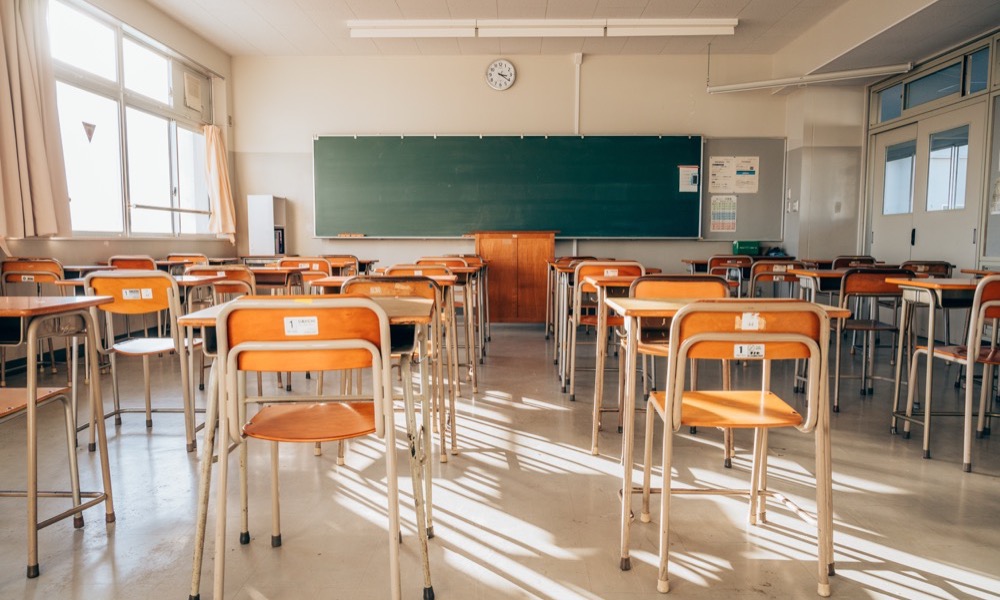
Japan is confronting mounting concerns over child safety, as data from education and police authorities point to record levels of school refusal, a rise in serious bullying cases, continued disciplinary action against educators for sexual offenses, and record numbers of child abuse cases by parents. Japan’s experience matters beyond its borders: As other advanced Asian democracies confront demographic decline and rising youth distress, how Tokyo responds will shape regional conversations about state capacity, social cohesion, and the limits of school-based welfare systems.
Japan’s education system is often considered a pillar of social stability, producing high achievement and social order while serving as a frontline institution for child well-being. Yet the latest figures suggest a system under strain, where safety risks are becoming more visible both in schools and at home. The result is not only a child welfare problem, but a governance challenge since the institutions tasked with protecting children are responding more actively, but not always coherently or consistently.
School refusal among younger students rose. The number of elementary and junior high school students who refused to attend school in Japan reached a record 353,970 in fiscal 2024—the 12th consecutive annual increase—while high school refusal declined slightly to 67,782.
There are different ways of viewing these trends. School refusal is often discussed in Japan, and elsewhere, as related to mental health issues, adjustment challenges, or absent or inattentive parents. But the scale of the recent increase, and its concentration among younger students, suggests a potential institutional problem. It raises the question of whether schools are equipped to function as safe environments for children who are socially vulnerable, isolated, or targeted by peers.
Serious bullying cases handled by police also rose sharply, signaling a tougher response. Police took action in 292 bullying cases at schools in 2023, a 66% increase from 2022, according to the National Police Agency (NPA) in April 2024. The number of elementary, junior high, and senior high school students punished in these cases also climbed to 404, a 81% increase from 2022. After declining steadily since 2014, the number of bullying incidents rose again in 2023, a trend the NPA attributed to progress in “school–police cooperation,” as the education ministry has urged schools to consult police proactively, even in cases they believe can be resolved internally.
All three school groups showed increases in perpetrators, but elementary schools recorded the highest number on record since 1991—125 referred to police, the highest since 1991. Assault cases dominated (162 of 292), while child pornography and prostitution cases (46) have nearly tripled over a decade, driven by smartphone use. Over 20% of cases involved the internet, where harm scales rapidly and persists indefinitely. In other words, the child safety challenge is no longer confined to school grounds. It increasingly spreads through smartphones, apps, group chats, and platforms, where harm can scale quickly and linger in digital memory and traces indefinitely.
Moreover, bullying is not confined to the classrooms and the corridors. A survey conducted in October 2023 found that club activities—structured around strict hierarchies—often replicate bullying dynamics. The most frequently reported experience was receiving unhelpful instruction, cited by 32.3% of junior high and 26.1% of senior high respondents. This was followed by being excluded or teased (27.1% and 23.8%) and verbal or physical abuse (16.6% and 21.4). While emotional exclusion declined in high school, reports of verbal and physical abuse increased.
On the other hand, educator misconduct has also remained a serious concern. A total of 281 public school teachers and staff were disciplined for sexual offenses in fiscal 2024, down slightly from the record high in fiscal 2023.
At the same time, Japan is grappling with a growing shortage of teachers. In academic year 2023, the ratio of applicants to available teaching positions fell to a record low of just 3.4 per post, prompting the government to introduce legislative reforms in 2025 aimed at reducing overwork and graduating boasting wages.
This combination of misconduct and staffing shortages creates an uncomfortable dilemma for policymakers. Tightening safeguards and reporting is essential for child protection, but it also places more pressure on an overworked workforce, potentially increasing reliance on stopgap hiring and weakening oversight in places with insufficient capacity.
Furthermore, child abuse cases handled by police have reached new highs. Police handled 2,649 child abuse cases in 2024 (up 11%), more than triple the 822 cases recorded in 2015. Fathers accounted for 46% of cases, mothers 26%. Child guidance centers handled 225,509 consultations, with psychological abuse (60%) most common. While fathers accounted for more physical and sexual abuse, mothers inflicted psychological abuse at comparable levels.
Since the Act for the Promotion of Measures to Prevent Bullying was enacted in 2013, the government and local boards of education have strengthened preventive, supervisory, and punitive measures on school violence and educators’ misconduct—which may have contributed to an increase in reported cases—protecting children from abuse by their parents at home remains an important challenge.
Therefore, while bullying and misconduct show the risks inside schools, some of the most serious forms of harm occur outside them, at home, where teachers and administrators have fewer opportunities to observe them and very few tools to address them. Taken together, these trends suggest not only a rise in reported harm, but a growing reliance on formal documentation and enforcement, as schools, police, and child welfare agencies renegotiate where responsibility begins and ends.
South Korea has adopted a tougher stance on school bullying. Data obtained by the office of Kang Kyung-sook, a lawmaker from the minor Rebuilding Korea Party, show that during the 2025 admissions cycle, six of South Korea’s ten flagship national universities rejected a total of 45 applicants due to documented involvement in school violence. This approach is set to become standard practice. From 2026 onward, all universities nationwide will be legally required to factor students’ school violence records into admissions decisions, with serious offenses permanently recorded in academic records.
That mindset has shifted dramatically over the past decade. Bullying is no longer viewed solely as a personal issue but increasingly as a breach of social trust. A series of high-profile incidents—including student suicides linked to bullying, public testimonies from celebrities and various TV programs discussing school bullying such as the Netflix hit The Glory (2022)—has pushed school violence out of the private sphere and into the center of national debate.
What Japan can learn from South Korea goes beyond recording serious bullying in academic profiles that affect university admissions. It also includes encouraging individuals—including public figures—to speak openly about their experiences, whether as victims or perpetrators, and promoting more TV programs and films that address bullying as a broader social issue. At the same time, it is important to recognize that allowing children a degree of autonomy in their peer relationships is a key part of personal development, making it essential yet challenging to strike an appropriate balance between autonomy and timely intervention.
Japan’s child safety crisis is a test of whether its education system can adapt to a new era shaped by digital exposure, changing family stressors, and rising expectations for institutional accountability. The data suggest that the government is moving more toward stronger enforcement and coordination, but the next step it must take is as much about culture as administration. It should consider building norms that make early reporting routine, make intervention legitimate, and make child protection a shared responsibility across schools, families, police, and civil society.

Peter Chai is a Ph.D. Researcher at the Graduate School of Political Science, Waseda University, Tokyo. He holds a BA in Economics and MA in Political Science from Waseda University. His research areas are political sociology, comparative politics, and public opinion. His research methodology is survey analysis, and his regional focus is East Asia.

Charles Crabtree is Senior Lecturer at Monash University. His research interests include intergroup relations and conflict with regional focuses on the Asia Pacific and the Former Soviet Union. He has published numerous articles at top journals in political science and other fields.



