
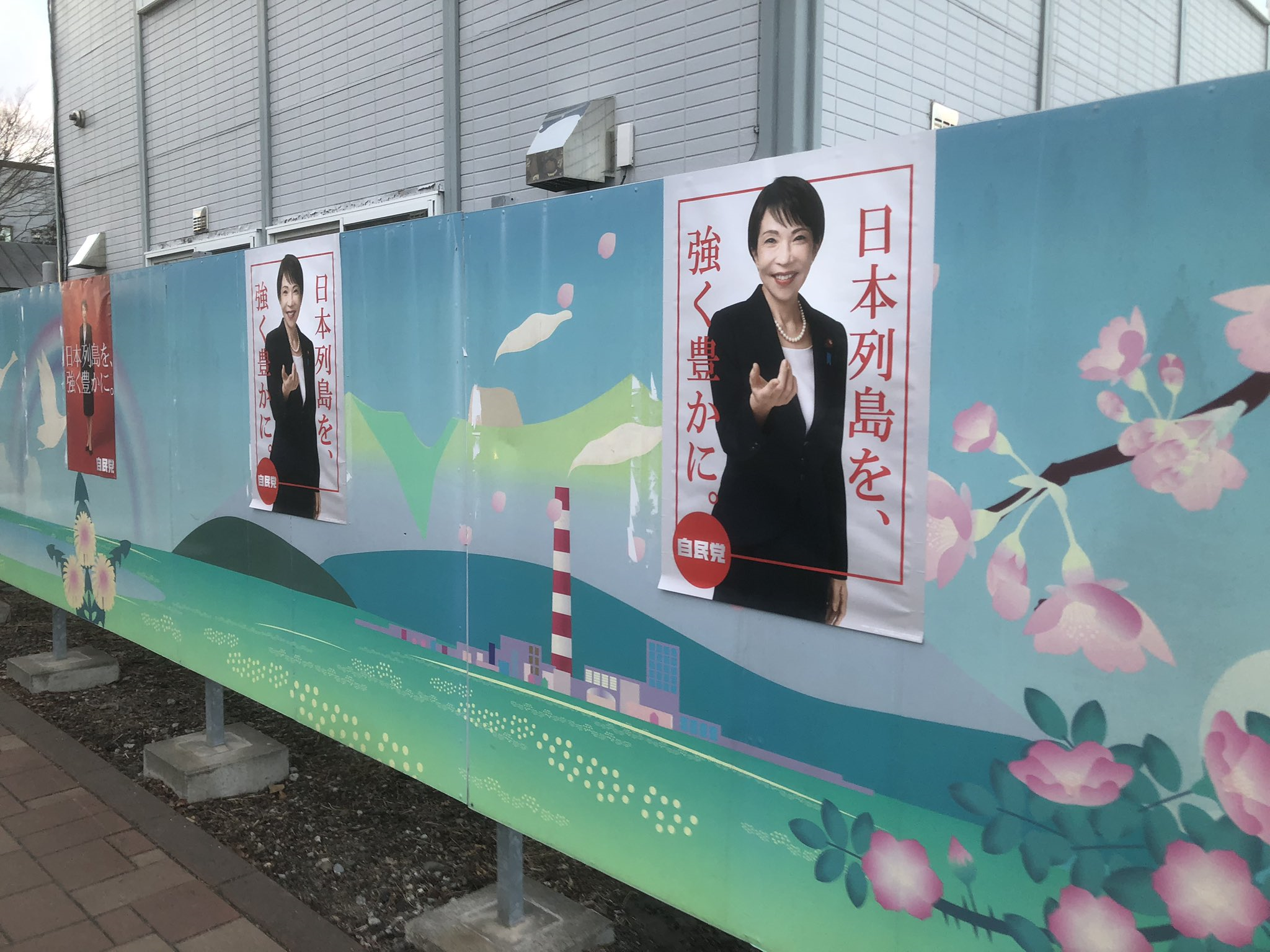
On Sunday, February 8th, Prime Minister Takaichi Sanae led the LDP to a landslide victory in the House of Representatives, securing 316 seats—the highest of any postwar government in Japan. Notably, it was the first lower house election (following the July 2025 House of Councillors election) in which the “foreigner issue” (gaikokujin mondai; 外国人問題) was highly salient. Recent contributions to Tokyo Review provide excellent introductions to this emerging rhetoric, showing that the discourse refers to not a single issue but rather amalgamates and flattens a myriad of perceived problems concerning disparate groups such as various categories of residents, tourists, and even overseas investors into a single foreigner/Japanese dichotomy.
Accordingly, using the umbrella label of “foreigner policy” (gaikokujin seisaku; 外国人政策), the LDP-Ishin coalition government led by Prime Minister Takaichi Sanae has already enacted an array of changes, such as increasing the difficulty of driver’s license conversion exams, hiking requirements for permanent residency while making them more easily revoked, mandating the reporting of nationality on property registrations, tripling the “International Tourist Tax” (which in reality is a simple departure tax levied on everyone). More yet have been proposed, such as drastic hikes to visa processing charges, mandating integration courses for resident foreigners, and restricting land and real estate purchases. Crucially, the rhetoric of the “foreigner issue” and “foreigner policy” have gained increasing—and often uncritical—acceptance in the broader public discourse.
Various explanations have been offered for why this rhetoric has erupted into the mainstream. These include the steady growth of Japan’s population of resident foreign nationals and the explosive ‘rebound’ of post-pandemic tourism, the role of Sanseito as an upstart movement uncharacteristically tech-savvy and well-connected with populists worldwide, and the catalyzing role of social media, which incentivizes sensationalist messaging. Each offers a compelling piece of the puzzle. However, instead of forensically excavating the origins of this rhetoric, I argue that its acceptance and often wholesale adoption into public discourse is a warning of much deeper problems.
Indeed, many in Japanese society are already pushing back against the “common sense” of the foreigner/Japanese dichotomy.
To make my argument, I draw on Tosaka Jun, whose diagnosis of similar symptoms in his own time—the early Showa period—has often been excluded from the canon of Japanese political thought. A student of the Kyoto School philosopher Nishida Kitaro, Tosaka produced a vigorous body of work analyzing the descent of liberal Taisho democracy into militarist fascism before being jailed as a political prisoner, ultimately perishing just before the end of the Second World War.
In his most famous work, The Japanese Ideology(日本イデオロギー論), Tosaka argues that the limits of Japanese liberalism drove the leading intellectuals and politicians of his time, including his own former teacher, to withdraw from engagement with contemporary economic and social crises into thought detached from material reality. Modernization, and imperial expansion thus went hand in hand with the romanticization of an idealized, primordial, and ethnonational Japanese identity, an ideology of retreat that Tosaka termed “Japanism” (nihonshugi; 日本主義). For Tosaka, this process occurred first and foremost at the level of thought: Japanism in the 1930s materialized in the attempt to reduce the complex social and economic relations of industrializing, capitalist Japan to the commoner-samurai-emperor relations of a reimagined feudal past.1
While The Japanese Ideology is not intended as a critique limited to Japan, Tosaka does draw out one aspect of Japan’s trajectory that he considers remarkable: under what he calls “constitutional fascism” (rikken-teki fashizumu; 立憲的ファシズム), prewar Japan moved from a vibrant—if tense—liberal democracy to fascist militarism without a clear institutional break but rather a shift in “common sensibilities” (jōshiki; 常識), the ideas, logics, and discourses that roughly delimit the boundaries of reasonable speech and action.
In Tosaka’s view, common sense is an idea that is seemingly banal yet unattainable: “[…] the level of common sense as an attitude is in truth not an average or a majority. Rather it is a kind of idealist line of force that disciplines and develops the average and the majority.”2 The growing normalization of the “foreigner problem” and the necessity for “foreigner policy” in contemporary Japan can readily be interpreted as such a shift in “common sensibility”: the government has adopted the seemingly moderate slogan of creating “a society of well-ordered and harmonious coexistence” (chitsujo no aru kyōsei-shakai; 秩序のある共生社会). But the undefinable notion of “well-ordered and harmonious coexistence” is in turn used to justify increasing scrutiny over issues such as foreign residents’ allegedly higher crime rates and alleged abuse of public health insurance benefits, despite the fact that audits have found them to be fairly uncommon.
The scrutinization of “foreigners” not only affects a small minority but is directly tied to reductions in the quality of life and freedoms of the “Japanese” majority.
For Tosaka, these changes in “common sense”—and the slide into fascism in general—were a consequence of the inability of liberalism at the time to confront the crises of capitalism facing the country: moral panic over the growing independence of urban women and “collapse” of the family system, the ravages of the Great Depression, and unrestrained military adventurism in continental Asia. It is difficult to ignore the parallels with our contemporary time, as many face rising prices and lagging wages, major industries struggle against foreign competition, energy and resource insecurity, demands for economic concessions from Japan’s erstwhile ally, and deepening social inequality.
What Tosaka’s analysis offers for our current moment is that the discursive construction of the “foreigner problem” cannot be understood simply as a collection of perceived grievances against foreign residents and tourists. Instead, using his framework, we can understand the discursive construction of the “foreigner” and strengthening of the “foreigner/Japanese” dichotomy as an appeal to ethnonationalist Japanese identity that seeks security in a romanticized past. To achieve this unattainable ideal, both in his time and ours, curricula are revised, labor protections rolled back, small victories in the struggle for gender and sexual equality reversed, and government surveillance justified. In other words, the scrutinization of “foreigners” not only affects a small minority but is directly tied to reductions in the quality of life and freedoms of the “Japanese” majority.
Indeed, from various positions, many in Japanese society are already pushing back against the “common sense” of the foreigner/Japanese dichotomy and the notion that the former should be tolerated only insofar as their existence benefits the latter. From local-level leaders to organized labor, anti-war activists to the LGBTQIA+ community, and even major business lobbies, a rising chorus of voices are moving to repudiate the intensifying problematization of ‘foreigners’. The extent to which these efforts are successful will be sure to have national ramifications.
- Tosaka, Jun. 2024. The Japanese Ideology: A Marxist Critique of Liberalism and Fascism. Columbia University Press. Chapter 10. ↩︎
- Chapter 3, Section 5. ↩︎

Yunchen Tian (or just Tian for short) is Program-Specific Associate Professor at Kyoto University’s Faculty of Law. Their primary research interests include migration governance and politics, the political economy of migration, and theories of the state. They were recently awarded the 2023 ISS/OUP Prize in Modern Japanese Studies for their article “Workers, Neighbours, or Something Else? Local Policies and Policy Narratives of Technical Intern Training Program Participants”.



