
The recent escalation of tensions around Iran and renewed instability in the Strait of Hormuz have exposed Japan’s energy import vulnerabilities with particular clarity. Around 90 to 95 percent of Japan’s crude oil imports pass through the Persian Gulf, leaving the country highly exposed to disruptions in Middle Eastern energy infrastructure and maritime shipping routes. In response, policymakers have renewed calls for expanding renewable energy, domestic energy production, and industrial decarbonization. In mid-March, Prime Minister Sanae Takaichi reached a $40 billion nuclear reactor agreement with the United States, while also restarting the world’s largest nuclear power station, the Kashiwazaki-Kariwa plant. The crisis also highlights a more concerning contradiction: many of the supply chains underpinning Japan’s decarbonization strategy remain tied to the same vulnerable energy networks and maritime chokepoints the transition is meant to reduce dependence on.
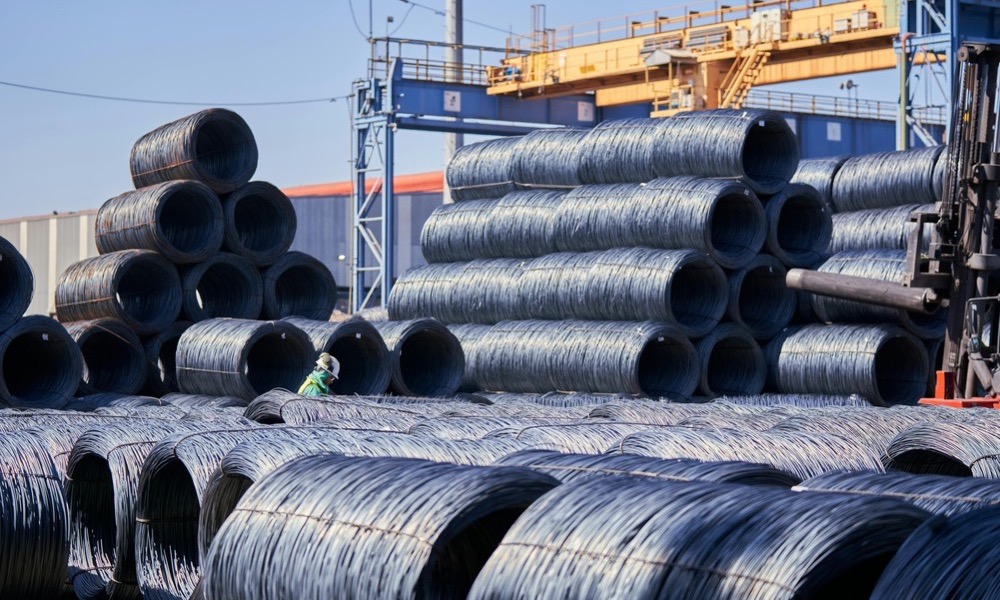
Steel sits at the center of this contradiction. Japan remains one of the world’s largest steel producers, producing 80.67 million metric tons in 2025. As outcompeting China in scale is nigh impossible, decarbonizing the sector has become a central industrial priority in an effort to both maintain competitiveness as well as to meet national decarbonization goals. Japanese steel production has traditionally relied on blast furnace-basic oxygen furnace (BF-BOF) systems, which use coal both as fuel and as a component to produce liquid iron, which is then refined into steel. These processes are highly carbon intensive, making steel an inherently challenging sector to decarbonize.
The future of “green” or low emissions steel has continued to move towards electric arc furnaces (EAFs) and eventually hydrogen-based direct reduced iron (H2-DRI) systems. EAFs rely primarily on electricity and recycled scrap steel, while H2-DRI systems replace coal with hydrogen during the iron reduction process. At first glance, this appears to be a straightforward technological shift; however, the transition is a bit more complicated than just metallurgy. Hydrogen production requires enormous amounts of electricity, making steel decarbonization inseparable from other existing energy security vulnerabilities like electricity generation and energy imports.
To circumvent this, Japanese steelmakers have begun turning toward importing reduced iron from places such as Australia and the Middle East, while concentrating on the later stages of steel production domestically. In 2024, Itochu Corporation partnered with JFE Steel and Emirates Steel to establish a supply chain for reduced iron from the UAE, with the goal of supplying Japanese steel production operations by 2027. However, this energy saving solution creates a paradox. The same maritime routes and geopolitical chokepoints that underpin Japan’s fossil fuel dependence may also underpin parts of its decarbonized industrial future. In addition, Japan imports a majority of its hydrogen from the Middle East, with Tokyo becoming a strategic partner to the MENA Hydrogen Alliance and the Institute of Energy Economics, Japan (IEEJ) signing an MoU with Saudi Aramco on hydrogen production in 2023.
The Strait of Hormuz therefore matters not only because energy passes through it, but because future hydrogen and green iron supply chains may increasingly depend upon it as well. At the same time, the crisis may strengthen Washington’s leverage over Japan’s energy and industrial policy. As Japanese steelmakers move toward hydrogen-based steel production and imported reduced iron from countries such as the UAE, the security of those supply chains becomes tied to U.S.-led maritime stability in the Gulf and Strait of Hormuz. If shipping disruptions intensify, Japan may become more dependent on American security guarantees, naval protection, and diplomatic coordination to maintain access not only to oil and LNG, but also to future “green steel” inputs. The United States has already pushed for greater Japanese involvement in maritime security operations surrounding the Strait of Hormuz, requesting the escort of oil tankers by ally warships.
The same maritime routes and geopolitical chokepoints that underpin Japan’s fossil fuel dependence may also underpin parts of its decarbonized industrial future.
Of course, Japan remains politically cautious about direct confrontation with Iran due to its longstanding diplomatic and energy ties in the region, domestic public opposition to military escalation, and continued dependence on Middle Eastern imports. Yet decarbonization may deepen Japan’s dependencies at the exact moment Washington is attempting to reshape global energy, shipping, and industrial networks around strategic competition with China, Russia, and Iran. In this sense, steel decarbonization creates multidimensional pressure for Japan. It is becoming embedded within broader strategic competition over shipping routes, alliance coordination, industrial supply chains, and geopolitical influence.
The result is a paradox at the center of Japan’s economic security strategy: decarbonization intended to reduce vulnerability may ultimately reorganize and redistribute that vulnerability instead of eliminating it.

Helen Cecile Nowatka is a graduate student at Georgetown University focusing on Japanese political economy and energy security and currently working as a research Fellow at the Cannon Institute, conducting research on Japan and Middle East energy relations.



